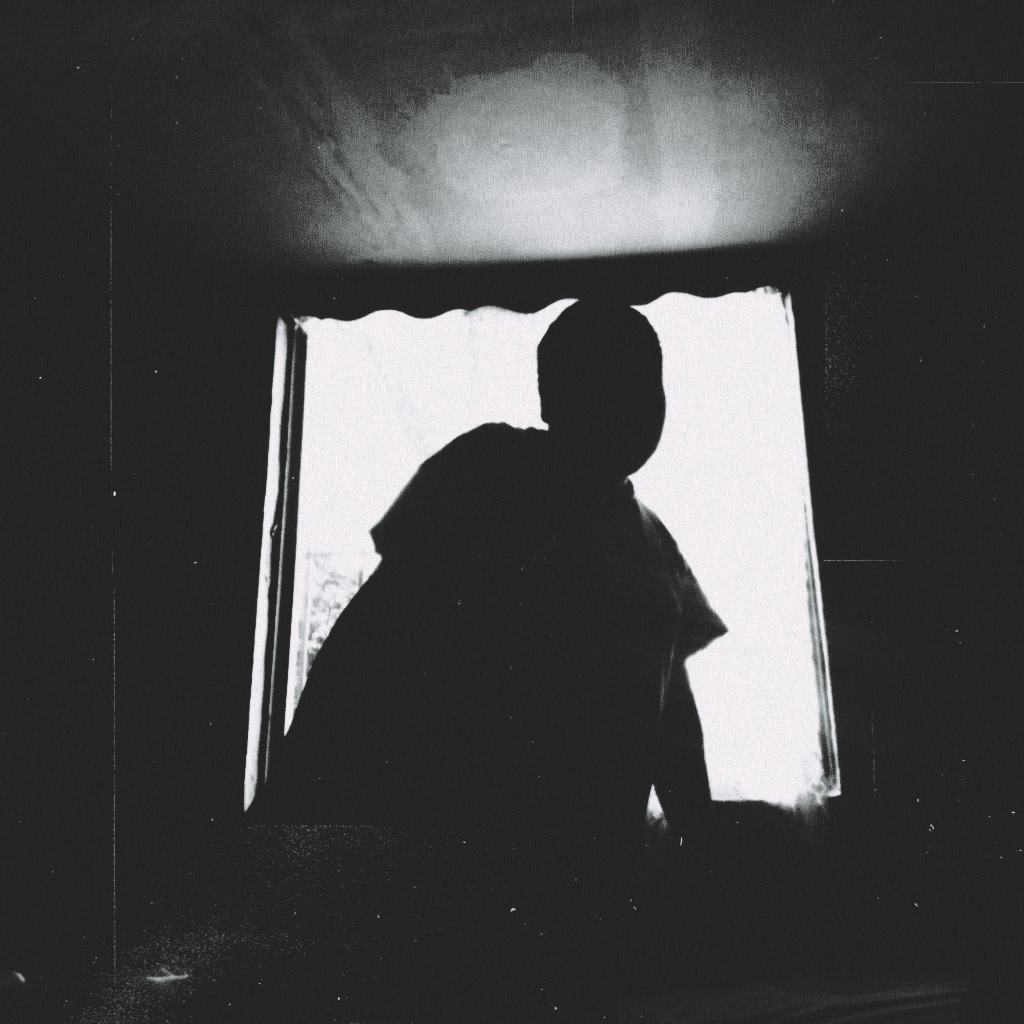
He was not born in palaces, nor wrapped in prophecy.
ROLONOS came into the world the way most do—crying, unwanted, in a village already poisoned by his god’s decree. His first breath was accompanied not by celebration, but by pity. For his body bore marks from the very beginning: a twisted leg, a scar across his cheek as if fate had carved its warning before he could speak.
In the world before ROKLA, he might have been cherished as unique, a living testament to the earth’s infinite variety. But in the age of judgment, he was a burden, a reminder of imperfection, a child doomed to whispers.
ROLONOS learned silence before he learned words.
When other children laughed, he stayed at the edge. When they ran, he limped behind. Their mothers pulled them close, as if his scars were contagious.
He discovered early that mirrors were not his enemy—it was people. He could survive his reflection, but not their stares. Their eyes cut deeper than any blade, shaping his soul into something cautious, heavy.
And yet, there was strength in that silence.
ROLONOS listened when others spoke carelessly. He observed the cruelties no one else noticed. He saw the way neighbors hid their wounds, the way fathers shamed their sons, the way shame grew like weeds between families. By the time he was a young man, he knew the law of ROKLA better than most priests knew their scriptures. He knew, because he had lived it.
Love was not something he expected. In truth, he had stopped believing it was possible.
The day he met REYUH, he did not recognize her as ROKLA’s daughter. To him, she was just a woman who did not turn away.
When others saw his limp, she saw his steadiness.
When others saw his scar, she traced it with her gaze as if it were a story worth reading.
The first time she touched his hand, he withdrew, ashamed. But she held it firmly, refusing to let go.
Rolonos: “Do you not see what I am?”
Reyuh: “Yes. And that is why I will not let go.”
It was in that moment he realized love did not erase scars—it transformed them. What had once been a mark of shame became, in her presence, a mark of survival.
But love with REYUH was not merely affection. It was rebellion. To be chosen by her was to stand against her father. To kiss her was to challenge the god who ruled the world with mirrors and shame.
ROLONOS never asked to be a symbol. He wanted only to live quietly, to love without spectacle. But the people saw in him something greater.
If the daughter of ROKLA could love the scarred, then perhaps they too were not beyond love. His relationship became a story whispered in marketplaces, carried in songs of defiance. Mothers told their children, “Even the broken can be loved.” Lovers clung tighter, emboldened by his example.
But with admiration came danger. Every glance toward him was also a mark against him. For as REYUH’s love lifted him up, ROKLA’s hatred bore down.
The Judge could tolerate defiance in strangers. But in his own blood? Never. And so ROLONOS became a target—not because he was imperfect, but because he proved imperfection could be loved.
There were nights when ROLONOS lay awake beside REYUH, fear gnawing at his chest.
Rolonos: “I am afraid. Not for myself, but for you. If he turns his wrath on me, I can endure it. But if he takes you from me…”
Reyuh: “Then he wins. And I will not give him that victory.”
Rolonos: “I am not strong enough to fight him.”
Reyuh: “You already have. Every day you live without hiding, you fight him. Every time you hold my hand, you defy him.”
Her words were comfort, but ROLONOS knew that rebellion born from love carried a cost. And he feared that cost would not be his alone to pay.
The world they lived in was not merciful.
Some adored ROLONOS for embodying resistance, but others despised him, seeing his love as theft. How could the scarred one win the heart of the divine? Jealousy poisoned whispers, and envy sharpened knives.
He became a paradox: hated for his scars, hated even more for his love.
No matter where he turned, ROKLA’s shadow followed.
And yet, ROLONOS did not abandon REYUH. For though fear consumed him, love gave him purpose. His life, once silent, had found a voice—not in speeches or wars, but in the simple act of being loved.
ROLONOS is no god. He carries no crown, no sword of fire. His power lies only in endurance. But perhaps that is the greatest rebellion of all: to endure when the world demands your silence, to love when the law decrees you unworthy.
When a man scarred by the world finds love, he exposes the lie at the heart of ROKLA’s judgment. He proves that beauty cannot be dictated, that worth cannot be erased.
Today, whenever someone scarred dares to be touched, there is ROLONOS.
Whenever a lover holds a broken hand as though it were sacred, there is ROLONOS.
Whenever shame is answered with tenderness, there is ROLONOS.
He is not legend because he is flawless. He is legend because he is not.
ROLONOS is the living contradiction to ROKLA’s world: the scarred man who proves that imperfection is not a curse but a vessel of love. He is a reminder that resistance does not always look like armies or revolutions. Sometimes it looks like two hands refusing to let go.
His story is not victory. It is not triumph. It is endurance—and endurance, in a world ruled by shame, is its own form of war.
 Luke Alexander
Leave a comment